About

The architect who reads buildings twice — once through structure, once through Vastu.

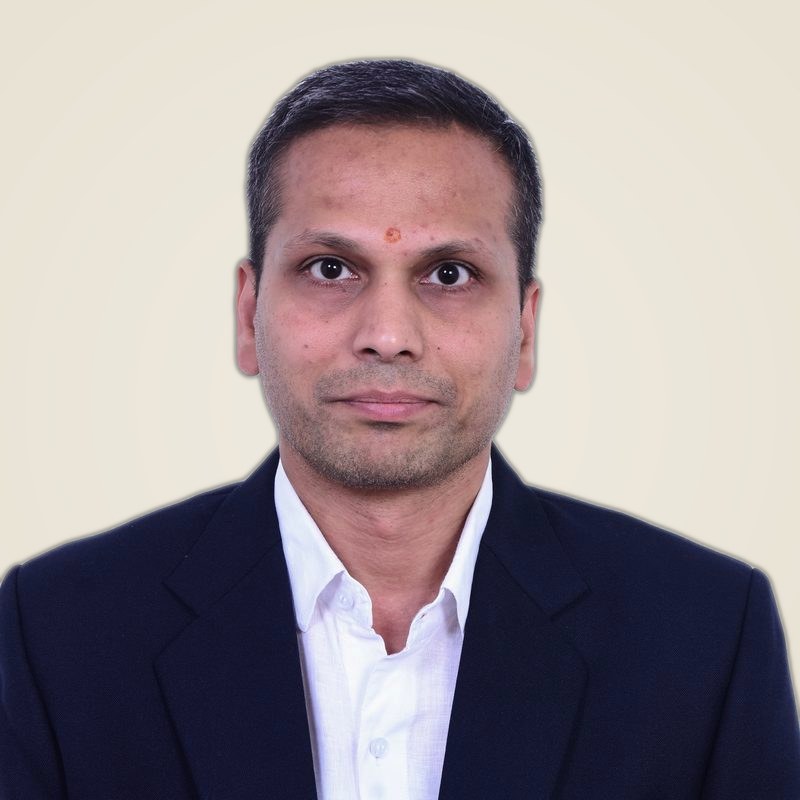
Rohit Khandelwal founded Aayatan Veda in 2020, the same year he earned the Vastu Acharya title from MahaVastu. But Vastu itself has been home since childhood — a practice absorbed long before it became a profession.

Rohit Khandelwal — Architect, IIT Kharagpur-trained urban planner, Vastu Acharya
500+
Homes aligned
6
Countries served
20+
Years in practice
4.8
Avg. rating (32 reviews)

The practitioner

Three disciplines, two decades, one practice.

Trained as an architect at Priyadarshini College of Engineering & Architecture, Nagpur (B.Arch, 2004), and then as an urban planner at IIT Kharagpur (M.C.P.), Rohit has been in professional practice for over twenty years.

The first decade of his career was spent inside the public sector — working on the new administrative capital of Chhattisgarh, and rising to Deputy General Manager (Planning) at the Naya Raipur Development Authority. Years later, after he had moved into private practice, the Naya Raipur City Project invited him back as its Planning Advisor — an acknowledgement that the earlier work had already proven itself.

Both public-sector roles now sit in his backstory. Today the practice is private, and Aayatan Veda is where the hands are. Out of a small studio in Raipur, he has led the design of over five hundred homes across India, the Gulf, the UK, the US, Australia, and Indonesia — drawn as architecture, read through Vastu, delivered as one integrated report.

The science came first. The tradition was earned.
— the Aayatan Veda working method

How we work

The drawing first. The chart second.

We start with the drawing, not the chart.

Every engagement begins with a floor plan — yours, your architect’s, or one we draft. Astrology, where relevant, enters only as an input to direction and entrance decisions. You will not be asked to share a kundli before you are asked to share a plan. The plan is what we work on; the chart is a lens, not the product.

We tell you what to do, and we tell you how.

A Vastu recommendation that ignores structure, cost, or local by-laws is not a recommendation — it is a wish. Because Rohit is also an architect, every suggestion comes with a feasibility note: is it structurally possible, what will it cost, what happens if you leave it alone. When something is not worth fixing, we say so.

We never sell fear, and we never sell remedies.

Aayatan Veda does not stock yantras, crystals, pyramids, or salt lamps. Where a specific object genuinely helps — a mirror, a colour, a plant — the report tells you where to buy it yourself, usually for a fraction of consultant-priced versions. You are paying us for judgement, not for inventory.

The story

The Aayatan Veda story

The story arrives in three movements, and the order matters.

The first was Vastu itself — not as a profession, but as a childhood backdrop. Rohit grew up around a home where direction, placement, light, and the meaning of a room were never casual. Long before it was a service he offered anyone else, Vastu was a way of looking. The formal title would come much later; the sight was there from the start.

The second was the architecture and the planning. A Bachelor of Architecture at Priyadarshini College, Nagpur in 2004, then a Master of City Planning at IIT Kharagpur, then a decade inside the Naya Raipur Development Authority — rising through the ranks to Deputy General Manager (Planning), working on the new administrative capital’s transit framework, its smart-city layer, and its green-and-sustainable-city plan. Cities taught him something homes alone cannot: that the built environment is a system, that direction and flow are not decoration, and that what you put where has consequences no one will trace back to the drawing five years later. The work held up — which is why, years after he had left full-time public service for private practice, the Naya Raipur City Project invited him back as its Planning Advisor. Both public-sector chapters — the Deputy General Manager run, and the Planning Advisor role that followed it — now sit in his backstory. Today, the practice is private.

The third was integration. In January 2020, Rohit completed the Advanced MahaVastu Course under VastuShastri Khushdeep Bansal and took the Vastu Acharya title. In the same year, he founded Aayatan Veda — the name for the practice that now brought all three threads into one pair of hands. The childhood sight was given a scholarly frame. The architecture and planning discipline was given a Vastu lens trained for modern homes. The practice sounds the way it does because this is the order in which it actually formed — not a consultant adding Vastu as a service, but an architect and planner formalising what he had always seen.

Aayatan Veda is the name we gave that integration. Aayatan means a sacred dwelling — a place where the household’s life is held. Veda is the body of knowledge. A home, done well, is both. The team runs deliberately small: fewer projects than we could take, so every report and every drawing leaves the office with Rohit’s eyes on it.

Credentials

For the record.

  • Bachelor of Architecture (B.Arch), Priyadarshini College of Engineering & Architecture, Nagpur (1999–2004)
  • Master of City Planning (M.C.P.), Indian Institute of Technology (IIT) Kharagpur (2005–2007)
  • Licensed architect — Council of Architecture, India · Registration CA/2004/34716
  • Associate Member, Institute of Town Planners, India (ITPI) · Membership AITPI/2011-034
  • Vastu Acharya — Advanced MahaVastu Course (January 2020), under VastuShastri Khushdeep Bansal, founder of MahaVastu
  • Former Planning Advisor, Naya Raipur City Project — an invited role earned by an earlier public-sector career at the Naya Raipur Development Authority that rose to Deputy General Manager (Planning), with work on Naya Raipur’s transit-oriented-development, smart-city, and green-and-sustainable-city frameworks. Both public-sector roles are now part of his backstory; the current practice is private.
  • Over 500 residential Vastu reports and designs delivered across India, the Gulf, the UK, the US, Australia, and Indonesia

What the work has looked like

Three homes, anonymised

Five hundred-plus homes is a number. Here is what three of them looked like in practice — anonymised, because privacy matters more than portfolio.

Selection Path · Mumbai

One week before the advance

A young family, one week from paying the advance on a 3BHK they loved. A twenty-minute compass reading at the door, crossed against the family’s directional charts, showed the flat’s entrance was working against the earning partner’s best direction by a full quadrant. We ran the same check against two other flats on their shortlist. The second one was a clear fit. They are still living there, four years in.

Clarity Path · Bangalore

Two fixes, under ten thousand

A couple into year three of their own home, reporting “something always feels heavy.” Room-by-room review found a misaligned mirror in the master bedroom and a kitchen extractor vented into the north-east. Two modifications, both under ten thousand rupees. Three-month follow-up confirmed the shift. No walls were broken.

Design Path · Raipur

First line, not a retrofit

A plot purchased before we met, already constrained on three sides. Full architectural design, floor by floor, with Vastu integrated from the first line — entrance quadrant fixed, zones assigned to the right rooms, service cores placed in the conflict zones where they belong. The client’s contractor built from our drawings directly, without a second round of corrections.

Ready to talk?

We read every message ourselves. Reply usually within four working hours.